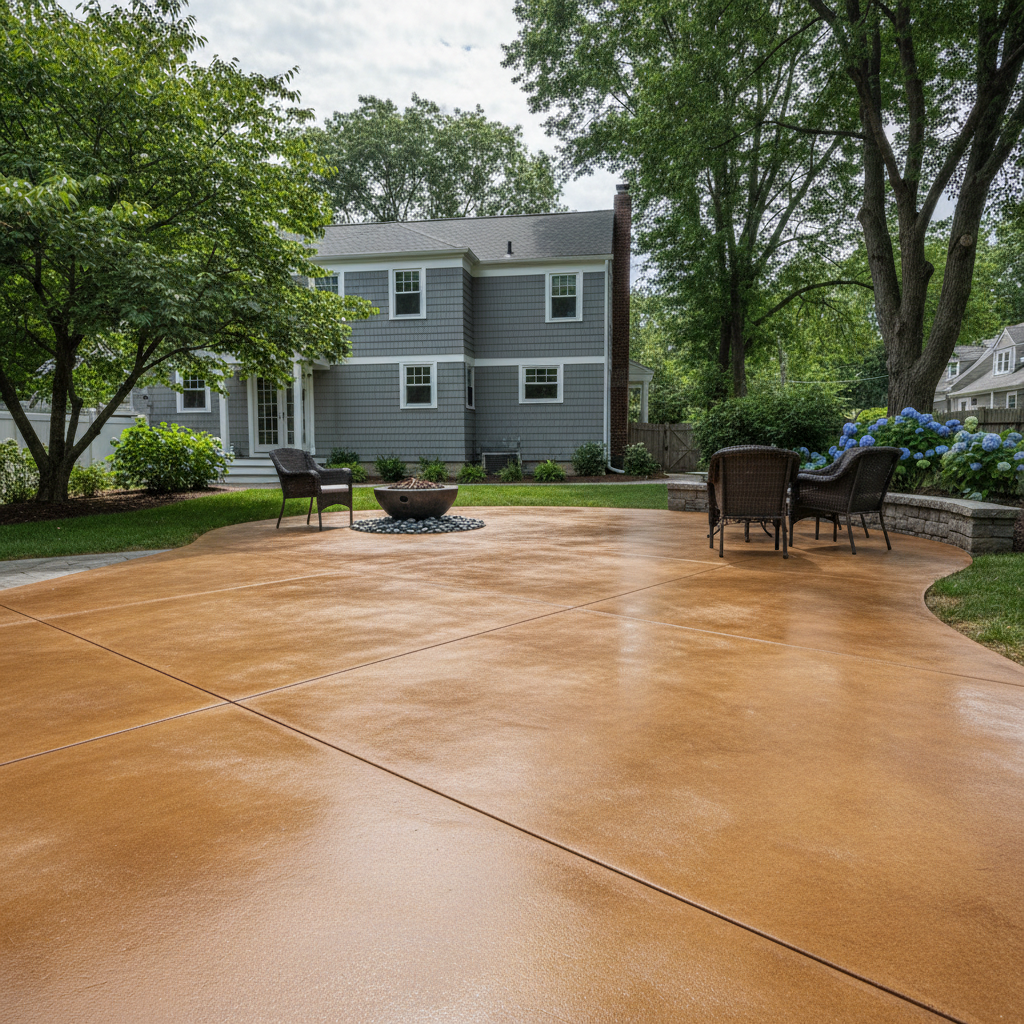
So, you've got some stained concrete, maybe it's your basement floor, a patio out back, or even a commercial space here in Providence. It looks fantastic, right? That rich color, the unique finish – it adds a ton of character. But here's the deal: to keep it looking that good for years, you can't just set it and forget it. Concrete staining, especially with our wild New England weather, needs a little love.
Extend Your Stained Concrete's Lifespan
The biggest thing you can do to make your stained concrete last is to protect that top coat, the sealer. Think of it like the clear coat on your car; it takes all the abuse so the color underneath doesn't. For interior floors, that means using felt pads under furniture, especially anything heavy that gets dragged around. Don't use harsh, abrasive cleaners. Just a pH-neutral cleaner and a mop will do the trick for most spills and dirt.
For exterior stained concrete, like a patio in Federal Hill or a walkway, it's even more critical. Our winters here in Rhode Island are no joke. Freezing and thawing cycles, road salts getting tracked in – it all takes a toll. You'll want to re-seal exterior stained concrete every 2-3 years, sometimes even annually if it sees a lot of foot traffic or direct sun. A good quality, penetrating sealer will protect against moisture intrusion, which is what causes a lot of the damage over time. Also, keep it clean. Don't let leaves and debris sit on it for long periods, especially wet ones, as they can stain the sealer or hold moisture.
Regular Maintenance: Simple Steps
Honestly, it's not rocket science. Regular maintenance is mostly about cleaning and being mindful. For interior floors, sweep or vacuum often to get rid of grit that can scratch the surface. Then, mop with a mild, pH-neutral cleaner. Stay away from anything with ammonia, bleach, or harsh acids – those can strip your sealer and dull the finish pretty fast.
Outside, a good rinse with a hose and a soft-bristle brush is usually all you need. For tougher spots, a pressure washer on a very low setting can work, but be super careful not to get too close or use too much pressure, or you'll blast off your sealer. If you see any spills, especially oil or grease, clean them up right away. The longer they sit, the harder they are to get out, and they can penetrate the sealer if it's compromised.
Warning Signs You Shouldn't Ignore
You've got to pay attention to your concrete. It'll tell you when something's up. Here are a few things to watch for:
- Dullness or Fading: If your vibrant color starts looking washed out, especially in high-traffic areas or spots exposed to a lot of sun, your sealer is likely wearing thin.
- Water Penetration: Pour a little water on it. If it soaks in and darkens the concrete instead of beading up, your sealer isn't doing its job anymore. This is a big one for exterior surfaces, as it means moisture can get in and cause freeze-thaw damage.
- Flaking or Peeling: This usually means the sealer wasn't applied correctly, or it's just completely failed. You might see small bits of the top coat coming off.
- Cracks: Small hairline cracks can happen, but if they start getting wider or you see a spiderweb pattern, that's a structural issue that needs looking at.
When to Call a Professional
Look, some things you can handle yourself, but for others, it's best to bring in the pros. If you're seeing widespread dullness or water penetration, it's probably time for a professional re-seal. We've got the right equipment and products to strip off old, failing sealer and apply a fresh, durable coat that’ll protect your investment. If you've got significant cracks, spalling (where the surface is chipping away), or areas where the stain itself seems to be failing, don't try to DIY a fix. That usually requires more specialized repair and re-staining techniques.
Here at Precision Concrete Providence, we've seen it all, from basements in the East Side to industrial floors down by the port. We know what our local climate does to concrete, and we know how to fix it right. Don't let a small issue turn into a big headache. If you're unsure, just give us a call. We're happy to come take a look and give you an honest assessment.