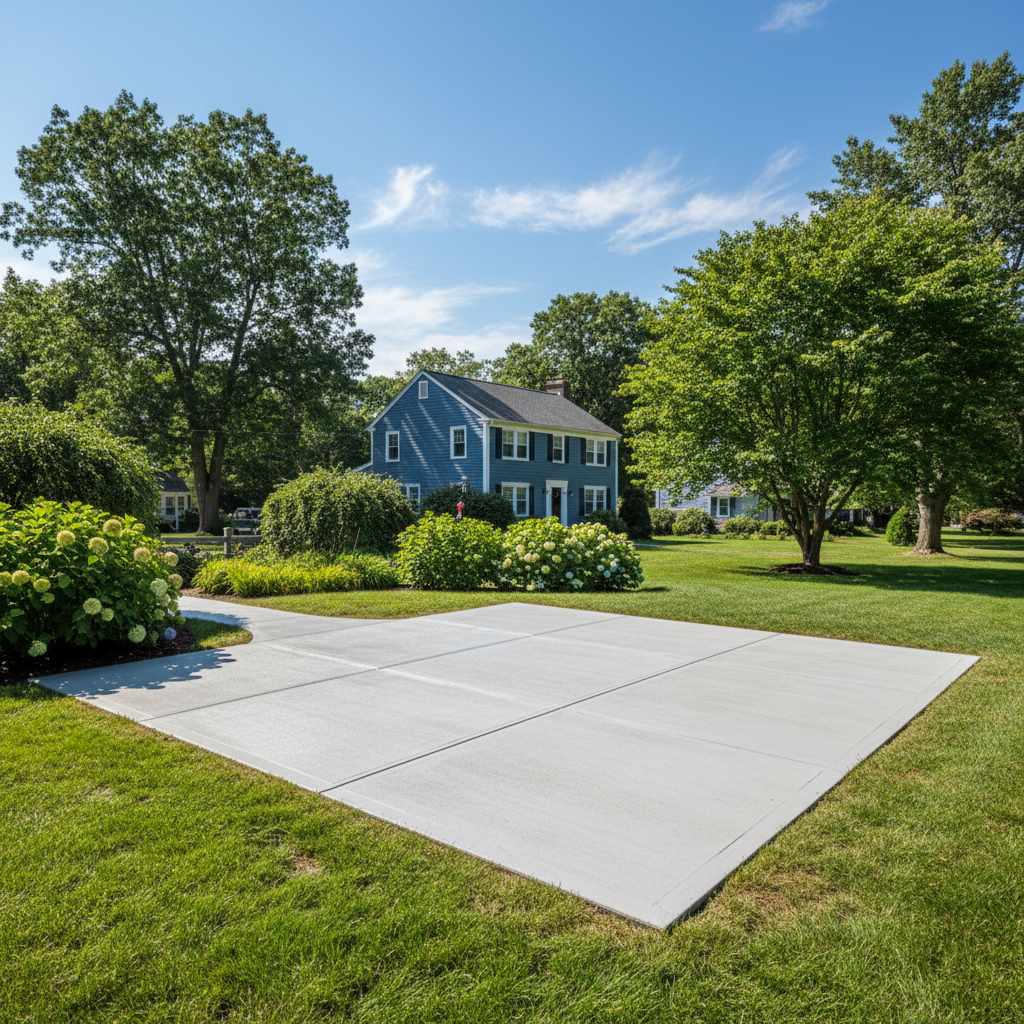
Your Concrete Flatwork here in Providence, whether it is your driveway, a patio, or a walkway, is an important investment. You want your Concrete Flatwork to last for a long time. Our New England weather means that Concrete Flatwork faces many challenges. Precision Concrete Providence has seen it all, from the harsh winters to the humid summers. We know that a little bit of proactive care makes a big difference. This care is not just about making your Concrete Flatwork look good. It is about protecting your property and avoiding costly Concrete Flatwork repairs later on.
Extending the Life of Your Concrete Flatwork
The biggest problem for Concrete Flatwork in Rhode Island is the freeze-thaw cycle. Temperatures drop below freezing and then warm up a bit. They then freeze again. Water seeps into the tiny pores of your Concrete Flatwork. This water freezes and expands by about 9%. Then it thaws. This constant expansion and contraction puts a lot of pressure on the Concrete Flatwork. This leads to cracks as well as scaling as well as spalling. This is a real problem for Concrete Flatwork, especially with our clay-rich soils and high water tables in areas like the East Side of Providence or down by the coast.
So, you might ask what you can do for your Concrete Flatwork. Sealing is your first line of defense for Concrete Flatwork. A good quality penetrating sealer creates a barrier. This barrier keeps moisture as well as chemicals from getting into the Concrete Flatwork. This is important for preventing freeze-thaw damage to your Concrete Flatwork. Precision Concrete Providence recommends applying a high-quality penetrating sealer every 2 to 5 years. This depends on how much traffic your Concrete Flatwork gets as well as how exposed it is to the elements. Spring or early summer are usually the best times to do this Concrete Flatwork sealing in Providence. Temperatures should be consistently between 50°F and 80°F. There should also be no rain in the forecast for at least 24 hours.
Precision Concrete Providence always tells folks that proper drainage is key for Concrete Flatwork. If water is constantly pooling on or near your Concrete Flatwork, it will cause problems. You must make sure your gutters are clear. Downspouts should direct water away from your Concrete Flatwork as well as your foundation. Sloping the ground away from Concrete Flatwork surfaces helps a lot too.
Regular Maintenance: Keep Your Concrete Flatwork Clean, Keep it Strong
Beyond sealing, regular cleaning is important for your Concrete Flatwork in Providence. Here is why:
- Sweep regularly: You should get rid of dirt as well as leaves as well as other debris. This stops organic matter from breaking down and staining the Concrete Flatwork surface. It also keeps abrasive particles from grinding into your Concrete Flatwork with foot traffic.
- Wash it down: A good rinse with a hose and a stiff brush a few times a year can remove surface grime from your Concrete Flatwork. For tougher stains, you might use a pressure washer. However, you must be careful not to use too high a pressure. High pressure can damage the Concrete Flatwork surface.
- Address spills immediately: Oil as well as grease as well as rust as well as even fertilizer can stain Concrete Flatwork if left too long. You should clean them up as soon as you can.
- Be smart about de-icing salts: Precision Concrete Providence knows we all want to keep our walkways clear in winter. Many de-icing salts can be very hard on Concrete Flatwork, especially newer Concrete Flatwork. They can make spalling and deterioration happen faster. You should try to use sand for traction instead. This is especially true on Concrete Flatwork that is less than a year old. If you must use salt, look for products that are safe for Concrete Flatwork.
Warning Signs of Problems: What to Look For in Your Concrete Flatwork
Your Concrete Flatwork will tell you when it is having issues. You just need to know how to listen. You should keep an eye out for these warning signs for your Concrete Flatwork in Providence:
- Cracks: Hairline cracks can be normal as Concrete Flatwork settles. However, if they start widening more than 1/8 inch, or lengthening, or if you see stepped cracks, that is a red flag. Cracks allow more water to get in. This makes freeze-thaw damage worse for your Concrete Flatwork.
- Spalling or scaling: This happens when the surface of the Concrete Flatwork flakes as well as chips as well as peels off. It is a classic sign of freeze-thaw damage as well as water infiltration in your Concrete Flatwork.
- Uneven surfaces: If your patio or walkway starts to sink or become uneven, it could mean issues with the sub-base or soil settlement. This is not just an eyesore. It is a tripping hazard.
- Efflorescence: Those white, powdery deposits on the Concrete Flatwork surface are efflorescence. It happens when salts within the Concrete Flatwork are drawn to the surface by moisture. While often cosmetic, it shows that moisture is moving through your Concrete Flatwork.
- Pitting: Small holes or craters on the Concrete Flatwork surface can be caused by de-icing salts or poor quality Concrete Flatwork.
When to Call a Professional Concrete Contractor
You do not have to tackle every Concrete Flatwork problem yourself. Sometimes, it is best to bring in the Concrete Flatwork pros. Here is when you should pick up the phone and call Precision Concrete Providence:
- Significant cracking: If you have Concrete Flatwork cracks that are wide, deep, or show signs of structural movement, you need an expert assessment. Precision Concrete Providence can determine if it is a minor Concrete Flatwork repair or something more serious.
- Extensive spalling or deterioration: If a large area of your Concrete Flatwork is flaking or crumbling, repairs might involve resurfacing or patching. These are beyond a DIY fix for your Concrete Flatwork.
- Uneven or sinking slabs: This often requires specialized equipment like slab jacking or polyurethane injection. This equipment lifts and levels the Concrete Flatwork safely as well as effectively.
- Drainage issues: If you cannot solve pooling water problems on your own, a Concrete Contractor professional can help identify the cause. They can also recommend solutions to protect your Concrete Flatwork as well as your foundation.
- Water intrusion in basements: If your Concrete Flatwork is near your house and you are seeing water in your basement, it could be related. Rhode Island's high water tables and heavy rains mean this is a common issue in Providence.
Precision Concrete Providence has been dealing with Concrete Flatwork in this climate for many years. We know what works as well as what does not work for Concrete Flatwork in Providence. You should not wait until a small issue becomes a major headache. Timely Concrete Flatwork repairs can prevent further damage. They can also save you a lot of money in the long run. If you are seeing any of these warning signs for your Concrete Flatwork, or just want some peace of mind, give us a call. Precision Concrete Providence is happy to take a look and give you an honest opinion.