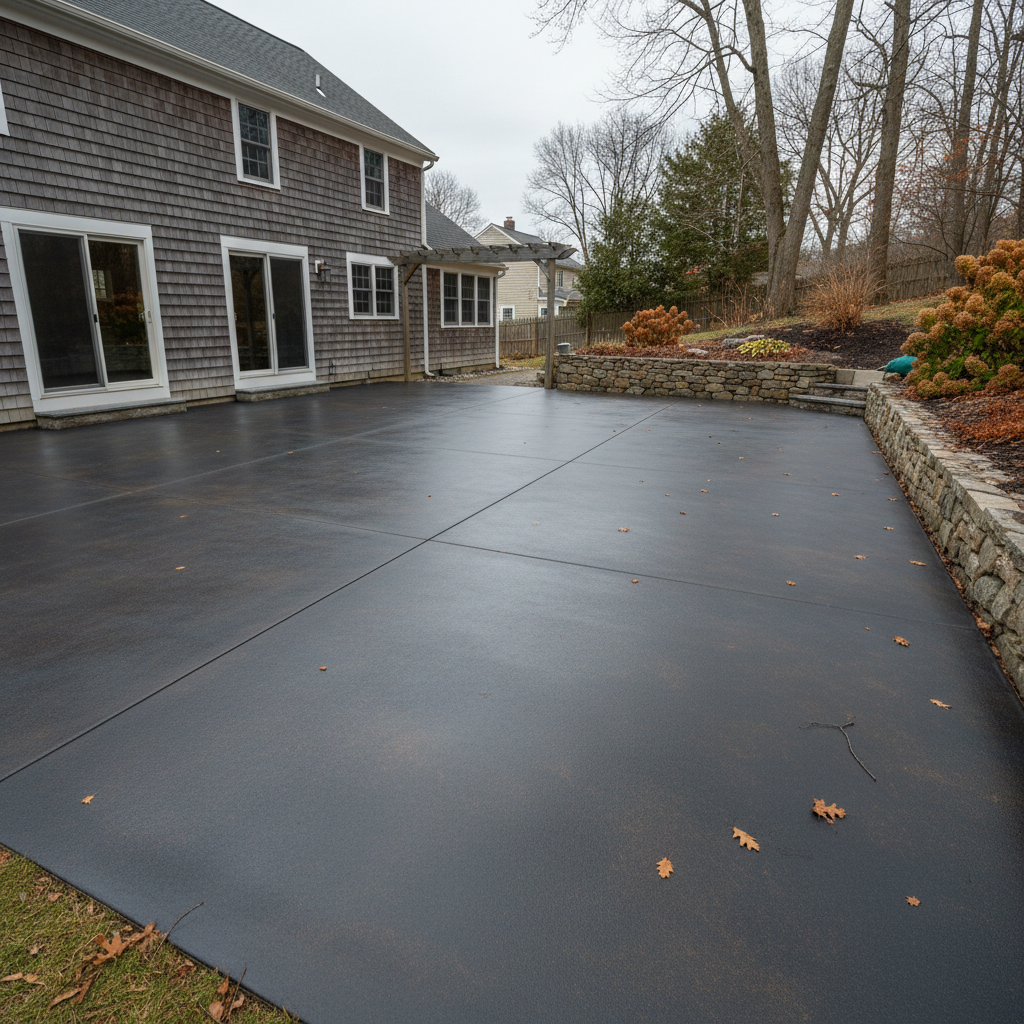
You're staring at your concrete patio or walkway, maybe it looks a little tired, and you're thinking about sprucing it up with a stain. Good idea, that; staining really can change a whole space. But here in Providence, with our crazy New England weather, you can't just pick any old weekend to get it done. Timing is absolutely key if you want that stain to look good and, more importantly, actually stick around.
When Should You Schedule Concrete Staining?
So, what's the best window? Generally, I tell folks to shoot for late spring, early summer, or early fall. We're really looking for that sweet spot where temperatures are pretty steady, and we aren't fighting extreme conditions. For us right here in Rhode Island, that usually means May through June, and then September until early October.
Why those times, you ask? It all comes down to the concrete itself and how well the stain can cure. Concrete needs to be dry, and the air temperature has to be just right – not too hot, not too cold. If it's too chilly, the stain won't soak in or cure properly. You'll just end up with a splotchy mess that won't last. And if it's too hot, especially with that intense summer sun beating down, the stain can dry way too fast. That leads to uneven color and, down the road, potential peeling. You've seen those old, peeling painted patios, right? We definitely want to steer clear of that with stain.
Weather Conditions That Matter for Staining
Beyond just the temperature, you've got to think about other weather factors. Rain, obviously, is a hard no. You need at least 24 to 48 hours of dry weather before you even start cleaning the concrete. Then, you need another 24 to 48 hours after the stain goes on and gets sealed. That's not always easy to predict with our quick-changing coastal weather, especially when those afternoon thunderstorms roll in off Narragansett Bay.
Humidity is another big one. High humidity can really slow down the drying and curing process. While it's not as much of a deal-breaker as rain or extreme temperatures, it can definitely stretch out your project timeline. Low humidity, on the other hand, can sometimes make stains dry too quickly. As I mentioned, that's not ideal for getting a nice, even finish.
Wind can also play a role. A strong breeze might dry out the surface too fast, but it can also blow dust and debris onto your freshly stained surface. Nobody wants a beautiful new patio with a bunch of grit embedded in the finish, do they?
Keeping Your Stained Concrete Looking Good Year-Round
Getting the stain applied correctly is just half the battle. To truly protect your investment and keep that color vibrant, you've got to take care of it all year. Here's how:
- Seal it properly: This is absolutely essential. After staining, we put on a good quality sealer. This protects against UV rays, moisture, and general wear and tear. You'll want to re-seal every 2-3 years, sometimes more often for high-traffic spots or if it's out in the harsh elements.
- Clean it regularly: Don't let dirt and grime pile up. A quick sweep and an occasional rinse with a garden hose and some mild soap is usually all it takes. Just avoid harsh chemicals or power washers set to high pressure; those can damage the sealer and even the stain itself.
- Watch out for spills: Oil, grease, rust, and even certain plant debris can stain your concrete if they sit too long. Clean them up right away.
- Winter care: This is huge for us here. While stained concrete holds up well, try not to use metal shovels directly on the surface. Plastic shovels are much better. Be careful with de-icing salts too; some can be really aggressive and damage the sealer or even the concrete over time. Look for calcium chloride-based products, or better yet, just use sand for traction.
- Protect from furniture: Use felt pads under heavy patio furniture legs. This prevents scratches, especially if you're sliding things around.
Look, staining concrete isn't just about slapping some color down. It's a process that demands attention to detail, especially with our local climate. If you're thinking about staining your concrete surfaces, whether it's a brand new patio or an older one that needs a facelift, give us a call at Precision Concrete Providence. We've been doing this for years, and we know what it takes to get it right the first time. That way, you'll have a beautiful, durable finish that lasts.